
Assam – From Bihu to Silk Weaving: The Cultural Identity of Assam
- Dreamsville India
- Mar 22
- 4 min read
Assam, the gateway to Northeast India, is a land where culture flows as gracefully as the Brahmaputra River. Known for its lush tea gardens, vibrant festivals, and exquisite textiles, Assam reflects a cultural identity deeply rooted in tradition, nature, and community life.
From the energetic celebrations of Bihu to the intricate craftsmanship of silk weaving, Assam’s heritage is a seamless blend of rhythm, artistry, and sustainability. This article explores how these cultural elements shape the unique identity of the state.
Bihu: The Heartbeat of Assamese Culture

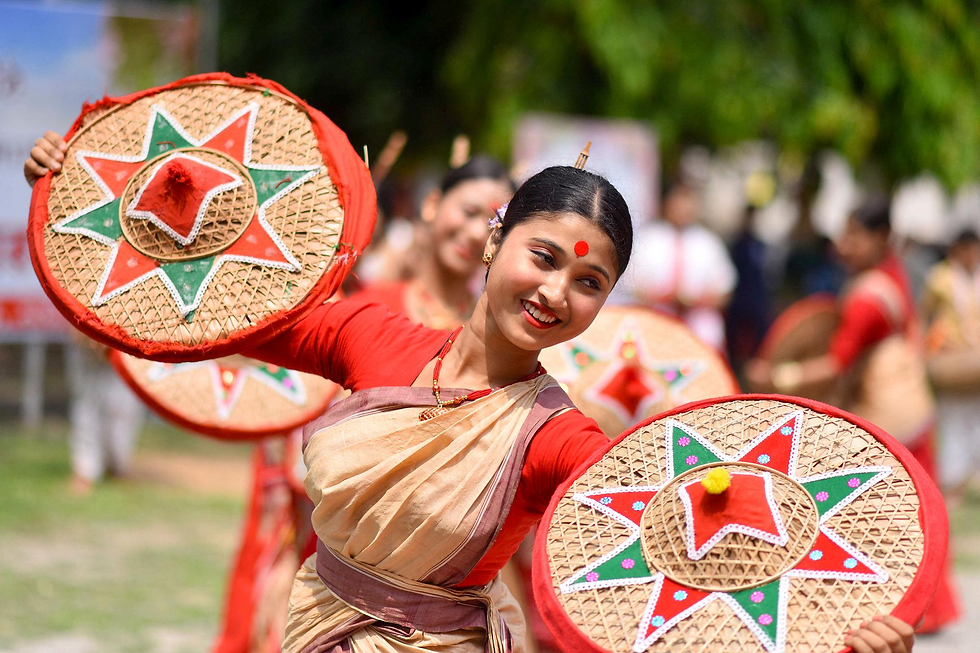
Bihu is more than just a festival in Assam—it is an emotion that binds the entire state together. Celebrated with music, dance, and community gatherings, Bihu marks different phases of the agricultural cycle and reflects the deep connection between people and nature.
There are three main types of Bihu:
Rongali Bihu (Bohag Bihu): Celebrated in April, it marks the Assamese New Year and the arrival of spring. This is the most vibrant and widely celebrated Bihu, filled with dance, music, and youthful energy.
Bhogali Bihu (Magh Bihu): Celebrated in January, it is associated with harvest and feasting. Community bonfires and traditional meals highlight the spirit of abundance.
Kongali Bihu (Kati Bihu): Observed in October, it is a quieter festival focused on prayer and hope for a good harvest.
The Bihu dance is one of the most iconic cultural expressions of Assam. Performed by young men and women, it is characterized by brisk movements, rhythmic footwork, and expressive gestures. Traditional instruments like the dhol (drum), pepa (buffalo horn pipe), and gogona create a lively musical atmosphere.
Bihu represents joy, unity, and the cyclical rhythm of life—making it the cultural heartbeat of Assam.
Silk Weaving: Threads of Tradition and Identity


Assam is globally renowned for its silk weaving tradition, which is not just an art but a way of life. The state produces some of the finest silks in the world, including Muga, Eri, and Pat silk.
Muga Silk

Known for its natural golden sheen, Muga silk is unique to Assam and symbolizes royalty and durability. It becomes more lustrous with every wash, making it highly valued.
Eri Silk

Often called “peace silk,” Eri is produced without killing the silkworm, making it an eco-friendly and ethical choice. It is soft, warm, and widely used in shawls and winter wear.
Pat Silk

Pat silk is known for its smooth texture and bright white appearance. It is commonly used in traditional Assamese attire like the mekhela chador.
The village of Sualkuchi, often referred to as the “Manchester of Assam,” is the hub of silk weaving. Here, generations of artisans have preserved and perfected the craft, passing down techniques through families.
Silk weaving in Assam is deeply intertwined with cultural identity. Almost every Assamese household has a loom, and weaving is considered both a skill and a tradition.
Traditional Attire and Cultural Expression

Assamese attire is a reflection of elegance and cultural pride. The mekhela chador, worn by women, is one of the most graceful traditional outfits in India, often made from Muga or Pat silk.
For men, traditional attire includes dhoti, kurta, and the iconic gamosa—a white cloth with red borders that symbolizes respect and identity. The gamosa is used in rituals, festivals, and as a mark of honour.
Jewellery in Assam is inspired by nature, featuring designs like flowers, birds, and traditional motifs. Pieces such as gamkharu (bracelets) and jonbiri (necklaces) add to the richness of Assamese cultural expression.
Music, Dance, and Folk Traditions

Assam’s cultural landscape is enriched by its music and folk traditions. Apart from Bihu dance, various tribal communities have their own unique dance forms and musical styles.
Folk songs often narrate stories of love, nature, and daily life, creating a strong emotional connection with the land. Instruments like the dhol, pepa, toka, and taal are integral to Assamese music.
These traditions are not confined to stages—they are part of everyday life, celebrations, and community bonding.
Cultural Evolution in the Modern Era
Assam’s traditions have gracefully adapted to modern times. Bihu is celebrated on global platforms, with performances in international festivals and cultural events.
Silk weaving has also evolved, with designers incorporating Assamese silk into contemporary fashion. From sarees and scarves to global fashion collections, Assam’s textiles are gaining international recognition.
Digital platforms and e-commerce have further enabled artisans to reach wider audiences, ensuring economic sustainability while preserving heritage.
In a rapidly changing world, Assam’s cultural identity offers valuable lessons in sustainability, creativity, and community living.
Sustainability: Eco-friendly silk production and traditional practices
Cultural Pride: Strong connection to heritage and identity
Creative Inspiration: Influence on fashion, design, and storytelling
Economic Impact: Support for artisan communities and local industries
From the rhythmic celebrations of Bihu to the timeless artistry of silk weaving, Assam’s cultural identity is a harmonious blend of tradition and modernity. It is a land where every thread tells a story, and every festival celebrates life.
Exploring Assam means experiencing a culture that is vibrant, meaningful, and deeply connected to nature and community. As these traditions continue to evolve, they remain a source of inspiration for everyone.


